Is WhatsApp SMS or MMS? SMS vs MMS vs RCS vs WhatsApp
WhatsApp is neither SMS nor MMS: it is an app that sends messages over the internet. How SMS, MMS, RCS and WhatsApp differ, in one table, for 2026.
 Nicolas ProvostMar 25, 2026 · 12 min read
Summarize this article with an AI
 ChatGPT
 Claude
Table of contents (12)
Key takeaways
- WhatsApp is neither SMS nor MMS, since it is an app that sends messages over the internet to people who also have the app.
- SMS and MMS are carrier services that reach any mobile number, and neither one is end-to-end encrypted.
- RCS upgrades them inside the phone's default messaging app, but only where the device and the carrier support it.
WhatsApp is neither SMS nor MMS. SMS and MMS are services run by your mobile carrier, while WhatsApp is an app that sends messages, photos and videos over your phone's internet connection (Wi-Fi or mobile data) to other people who have the app.
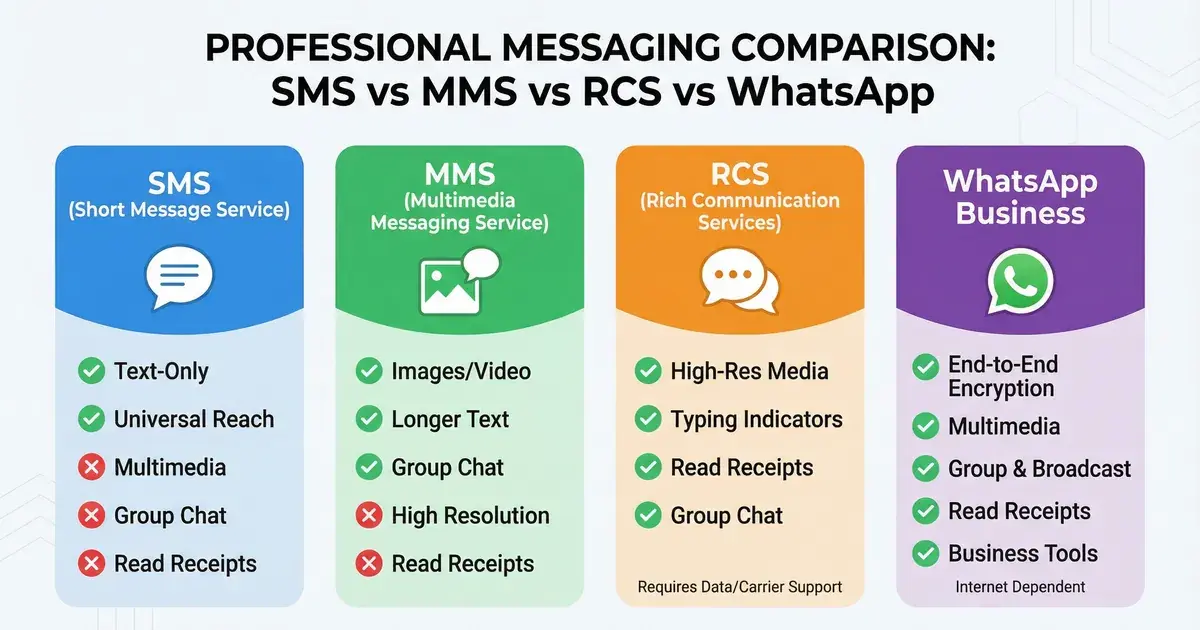
That one difference explains most of the others. Here are the four ways a phone or a business can send a message, side by side. If you only need two of them, read WhatsApp vs SMS for cost by country, or RCS vs SMS.
SMS vs MMS vs RCS vs WhatsApp at a glance
| SMS | MMS | RCS | ||
|---|---|---|---|---|
| What it is | Carrier text message | Carrier multimedia message | Carrier service, the successor to SMS and MMS | Messaging app owned by Meta |
| Travels over | Carrier network, with a text-messaging plan | Carrier network, with a text-messaging plan | Wi-Fi or mobile data | Internet (Wi-Fi or mobile data) |
| What it sends | Text | Texts, photos and videos | Texts, high resolution photos and videos, links, read receipts, typing indicators | Text, photos, videos, documents, location, voice calls |
| App needed | No, the phone's messaging app | No, the phone's messaging app | No, the phone's messaging app, on supported devices and carriers | Yes, WhatsApp on both sides |
| End-to-end encrypted | No | No | Only in some conversations | Yes, personal messages and calls |
| Who it reaches | Mobile phone numbers | Mobile phone numbers | Phones where RCS is supported and turned on | More than 3 billion people in over 180 countries |
| For a business | Through an SMS provider | Through an SMS provider | Through RCS for Business | Through the WhatsApp Business app or the WhatsApp Business Platform |
Sources, read on October 8, 2026: Apple, iMessage, RCS and SMS/MMS ("SMS and MMS are carrier-provided services", "RCS is a carrier-provided service", "SMS/MMS messages aren't end-to-end encrypted"); Google, RCS chats in Google Messages and end-to-end encryption in Google Messages; WhatsApp, About and its Google Play listing.
Is WhatsApp SMS or MMS?
Neither one. An SMS or an MMS is handed to your carrier, which delivers it to a phone number. A WhatsApp message is handed to the WhatsApp app, which delivers it over the internet to the same app on the other person's phone.
WhatsApp says so itself: its About page states that "WhatsApp started as an alternative to SMS" and that the product now supports "text, photos, videos, documents, and location, as well as voice calls". The same page describes WhatsApp as free, with the footnote "Data charges may apply", because the messages use your internet connection and not your text-messaging plan.
Three practical consequences:
- You need the internet. Without Wi-Fi or mobile data, a WhatsApp message waits. An SMS only needs carrier signal.
- The other person needs WhatsApp. An SMS or MMS reaches any mobile number. A WhatsApp message reaches people who installed the app.
- Your phone number is only the identifier. WhatsApp's listing says "All you need is your phone number, no user names or logins". The number identifies you; it does not mean the message goes through the carrier's texting service.
Does WhatsApp use MMS for photos and videos?
No. A photo, a video, a voice message or a document sent in WhatsApp travels through the app over the internet. MMS is the carrier's own service for picture and group messages, and WhatsApp does not go through it.
This is also why the two behave differently on a phone. Apple's support page says that with SMS/MMS "you can send texts, photos and videos, links, and more", but that these messages "aren't end-to-end encrypted". WhatsApp's listing states that "personal messages and calls to friends and family are end-to-end encrypted". For what separates a text from a picture message on the carrier side, see our SMS vs MMS guide, and for the meaning and limits of a text, what SMS means.
What is the difference between an MMS group and a WhatsApp broadcast?
They are opposites. In a group MMS, according to Apple's page on group messages, everyone can send and receive photos and videos and "see all responses from the group". It is a shared conversation carried by the carrier.
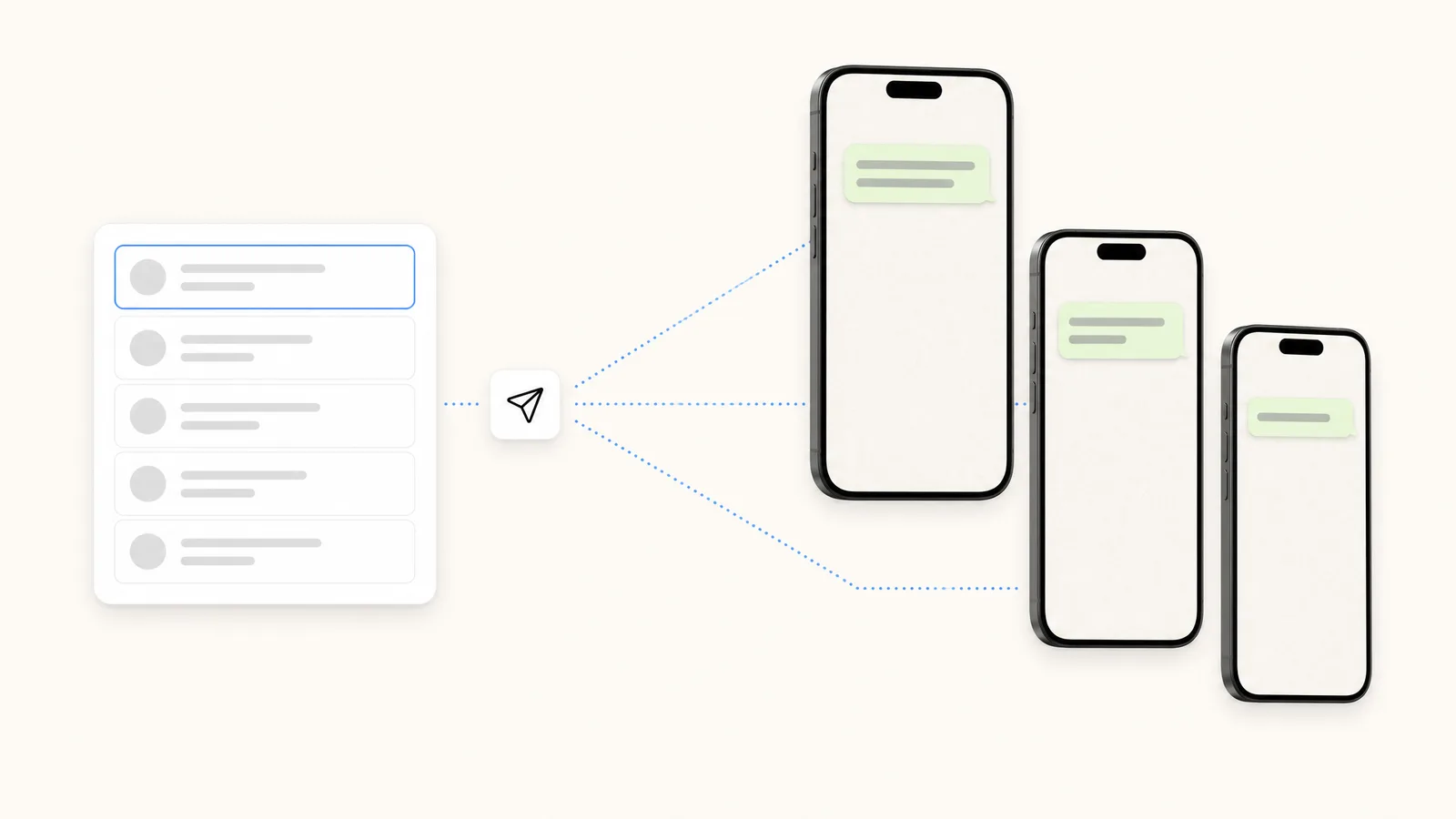
A WhatsApp broadcast list is one-to-many. WhatsApp's Help Center explains that recipients receive the broadcast as an individual message from you in their Chats tab, and that their reply is also an individual message that is not sent to the other contacts on the list. Only people who added you to their phone's contacts receive it, and each broadcast list can include up to 256 contacts (How to use broadcast lists, read on October 8, 2026).
If you want everyone to talk together on WhatsApp, that is a group chat, not a broadcast. If you want to send one message to many customers, read our WhatsApp broadcast guide.
SMS: the carrier text message
SMS is the standard text message: plain text delivered by the carrier to a phone number, with no app to install. On an iPhone, Apple notes that you need "a text-messaging plan that supports these services".
For a store, that makes SMS the channel that reaches any mobile number, with text and a link and nothing else. It is commonly used for order notifications and short, time-sensitive alerts, often as automated order and delivery texts. It cannot show the product or offer buttons.
If SMS is on your list, compare the best SMS marketing apps for Shopify, or the best abandoned cart apps for recovery across channels. For the two channels working side by side on a store, see SMS marketing for Shopify.
MMS: the carrier picture message
MMS is the carrier service that adds photos, videos and group conversations to texting. Like SMS, it goes through the carrier and is not end-to-end encrypted. It brings the picture that an SMS cannot carry, but no interactive elements.
For abandoned cart recovery, an MMS can show the product, without a button to return to the cart. Carriers set their own rules for MMS attachments, which our SMS vs MMS guide goes through.
RCS: the successor to SMS and MMS
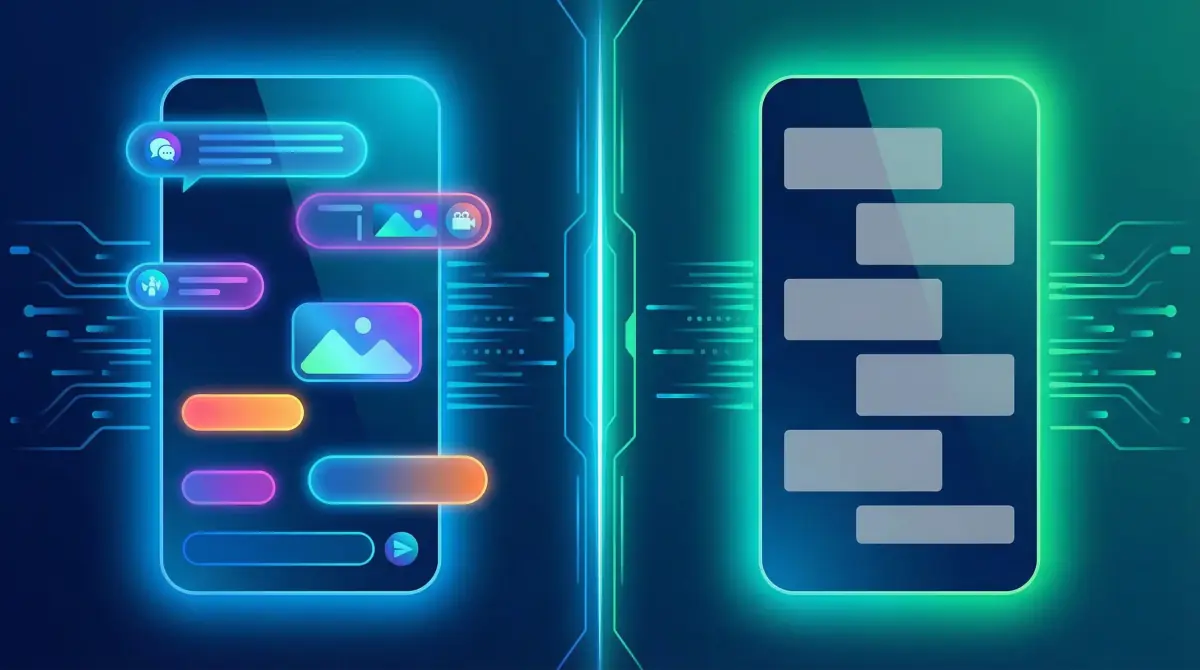
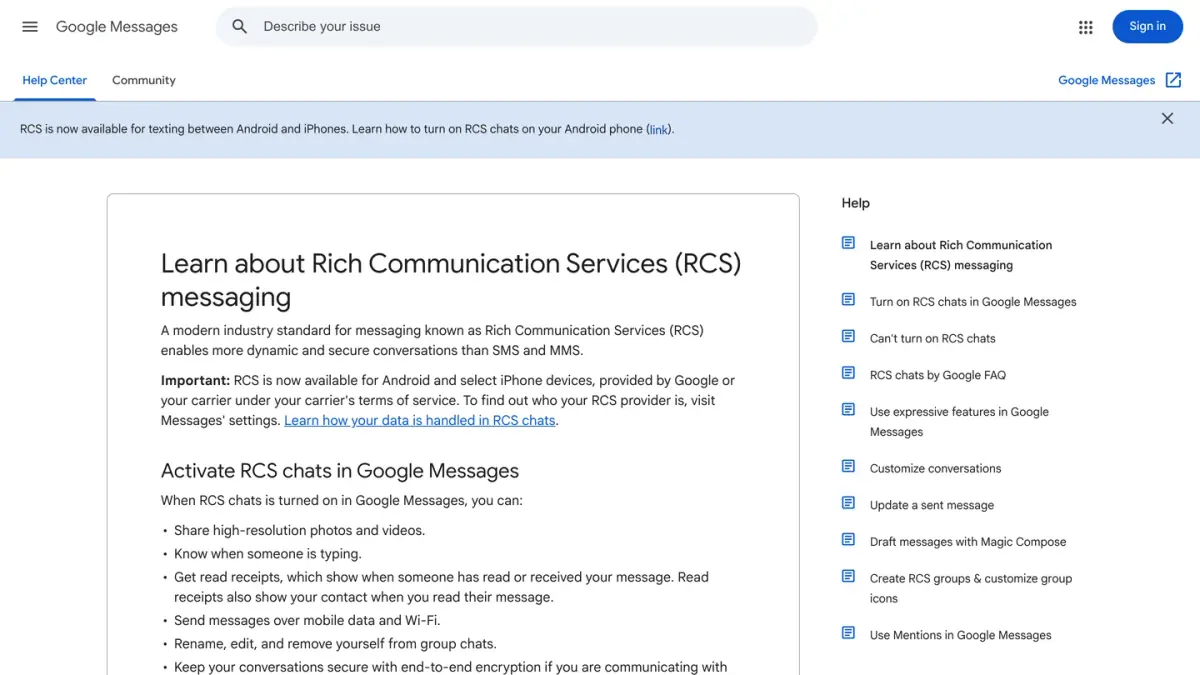
RCS (Rich Communication Services) is the newer carrier standard used in the phone's default messaging app. Apple describes it this way: "With RCS, you can send texts, high resolution photos and videos, links, and more. RCS also supports delivery and read receipts and typing indicators." Google calls it "a modern industry standard for messaging" and notes that with RCS chats turned on, "you can send messages over Wi-Fi".
Two things to know in 2026:
- Availability depends on the device and the carrier. On an iPhone, Apple says "you need iOS 18 and a text-messaging plan from a carrier that supports RCS on iPhone". There, the bubble color separates iMessage from RCS and SMS, as explained in why your texts are green; for the app-to-app comparison, see iMessage vs WhatsApp.
- Encryption is conditional. The GSMA's Universal Profile 3.0 (March 14, 2025) defined end-to-end encryption for RCS based on the Messaging Layer Security protocol. Apple's page says "RCS messages can be end-to-end encrypted when all participants have carriers that support encryption", and Google says RCS conversations between Google Messages users default to end-to-end encryption.
For the two-way comparison, read RCS vs SMS: content, reach, fallback and US prices per message. How brands get access to RCS, and what a business message can show, is covered in our RCS business messaging guide. For an online store, our RCS marketing for Shopify page shows a product card, a carousel and action buttons.
RCS vs WhatsApp: what is the difference?
Both send rich messages over the internet, and both show read receipts and typing indicators. The difference is who runs the service and where it lives.
| RCS | ||
|---|---|---|
| Run by | Carriers (and Google, in Google Messages) | Meta |
| Where the message arrives | The phone's default messaging app | The WhatsApp app |
| Works when | Device and carrier support RCS, and it is turned on | Both people have WhatsApp |
| If it is not available | The message can go as SMS or MMS | No carrier fallback: the person needs the app |
| End-to-end encryption | In some conversations | Personal messages and calls |
For a business, RCS for Business lets brands, in Google's words, "engage with customers seamlessly on Android and iOS" with "distinctive branding and rich media" and a "Verified" icon (Google for Developers, read on October 8, 2026). On WhatsApp, a business uses the WhatsApp Business app or, at scale, the WhatsApp Business Platform, for campaigns to customers who opted in.
WhatsApp: the messaging app
WhatsApp is a messaging app used, by its own count, by more than 3 billion people in over 180 countries. For a business it comes with rules of its own: customers must opt in to receive messages (WhatsApp Business Messaging Policy, last updated September 23, 2026), messages a business starts are sent as templates in set categories, and Meta charges for delivered messages (see the cost section below).
What stores use it for:
- Abandoned cart recovery: product reminders with a link back to the cart
- Customer support: conversations with your team, and an AI chatbot for common questions (see our case studies)
- Campaigns: segmented marketing campaigns to opted-in customers
- After the purchase: upsells, review collection and back-in-stock alerts
Kanal is a WhatsApp marketing and sales app for Shopify stores, with a Shopify integration and integrations with Klaviyo, Gorgias and Zendesk. Kanal sends SMS campaigns and WhatsApp campaigns from the same app; it does not send MMS.
Which channel fits which job?
| Job | SMS | MMS | RCS | |
|---|---|---|---|---|
| Reach any mobile number, no app | Yes | Yes | Only where supported | No, the customer needs the app |
| Show a product image | No | Yes | Yes | Yes |
| Two-way conversation in one thread | Text replies | Text and media replies | Yes | Yes |
| Read receipts | No | No | Yes | Yes |
| End-to-end encryption | No | No | In some conversations | Yes, for personal messages and calls |
Most stores end up with more than one channel: WhatsApp for conversations, campaigns and cart recovery with customers who use it, SMS as the channel that reaches every mobile number, RCS where their provider and carriers support it, and email for long-form content (with Klaviyo, WhatsApp messages can be triggered from the flows you already run). There is no independent public benchmark comparing the channels, so send the same offer on two of them and compare clicks and revenue in your own reports.
What does each channel cost a business?
SMS, MMS and RCS are billed by your carrier or messaging provider, at rates that depend on the country and the volume: ask your provider for its rate card.
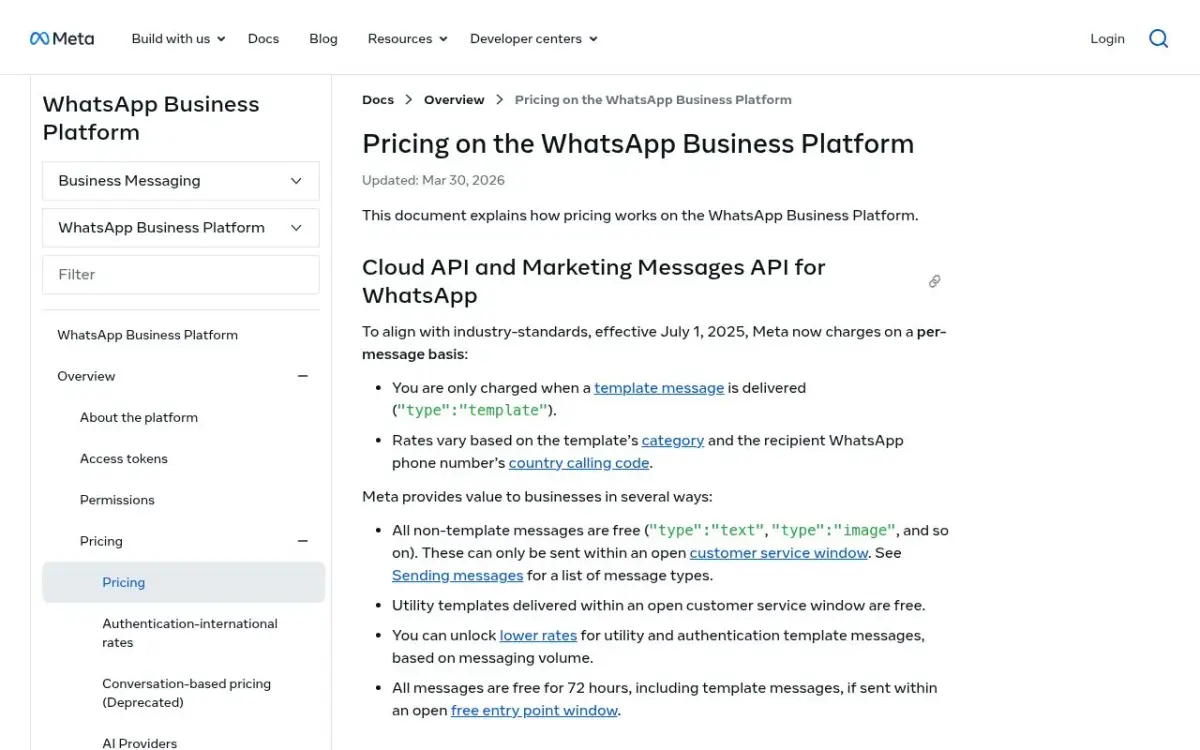
WhatsApp publishes its model. On the WhatsApp Business Platform, according to Meta's pricing documentation (updated September 30, 2026, read on October 8, 2026):
- Meta charges per delivered message, at a rate that varies with the message category (marketing, utility, authentication, service) and the country of the recipient's phone number.
- Meta does not charge for messages from users to businesses.
- Replies inside the 24-hour customer service window count as service messages. Since October 1, 2026, each business phone number gets 1,000 service messages per month at no charge, and Meta charges from the 1,001st.
For country-by-country rates, see WhatsApp vs SMS pricing by country, and for the United States, WhatsApp marketing in the USA. Kanal's plans are on the pricing page, and our ROAS calculator helps you compare a campaign's cost with what it brings in.
The short version
- WhatsApp is not SMS and not MMS: it is an app that sends over the internet.
- SMS and MMS are carrier services that reach any mobile number, without encryption.
- RCS upgrades them inside the default messaging app, where the device and carrier support it.
- For a store, the channels complement each other, and the right mix depends on where your customers already talk.
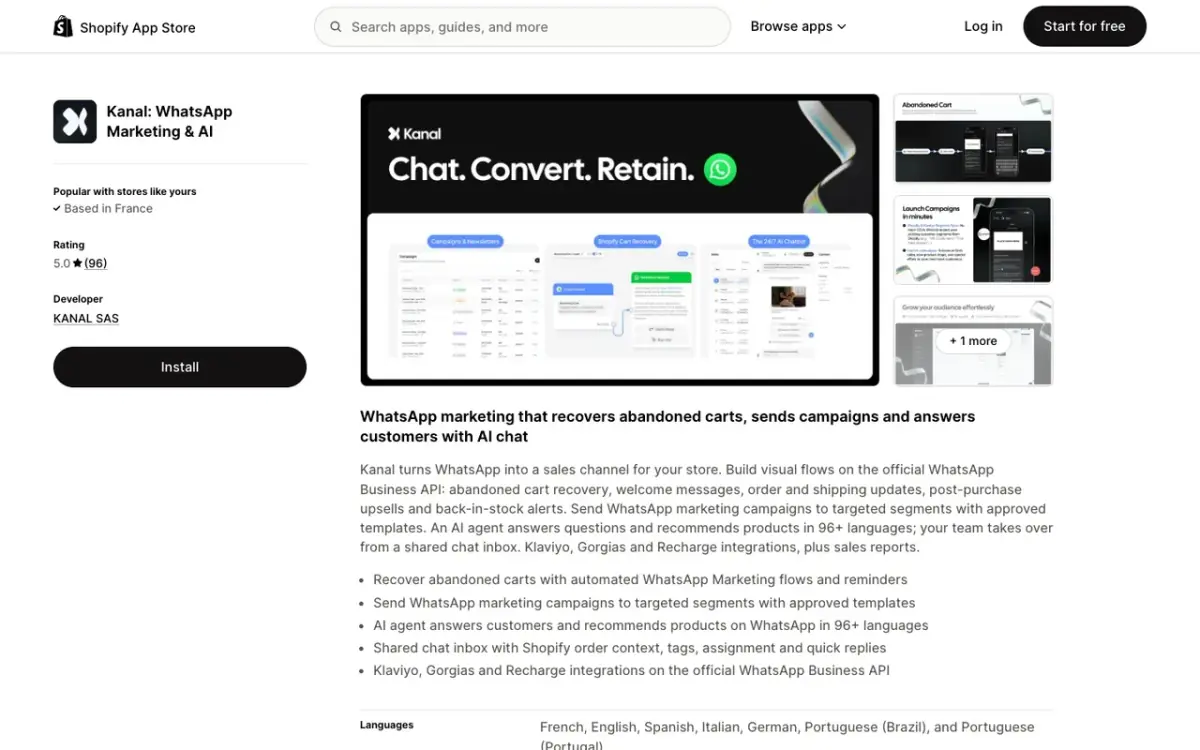
To run the WhatsApp side on Shopify, install Kanal from the Shopify App Store or book a demo.
Tools: WhatsApp Link Generator | WhatsApp QR Code Generator | ROAS Calculator
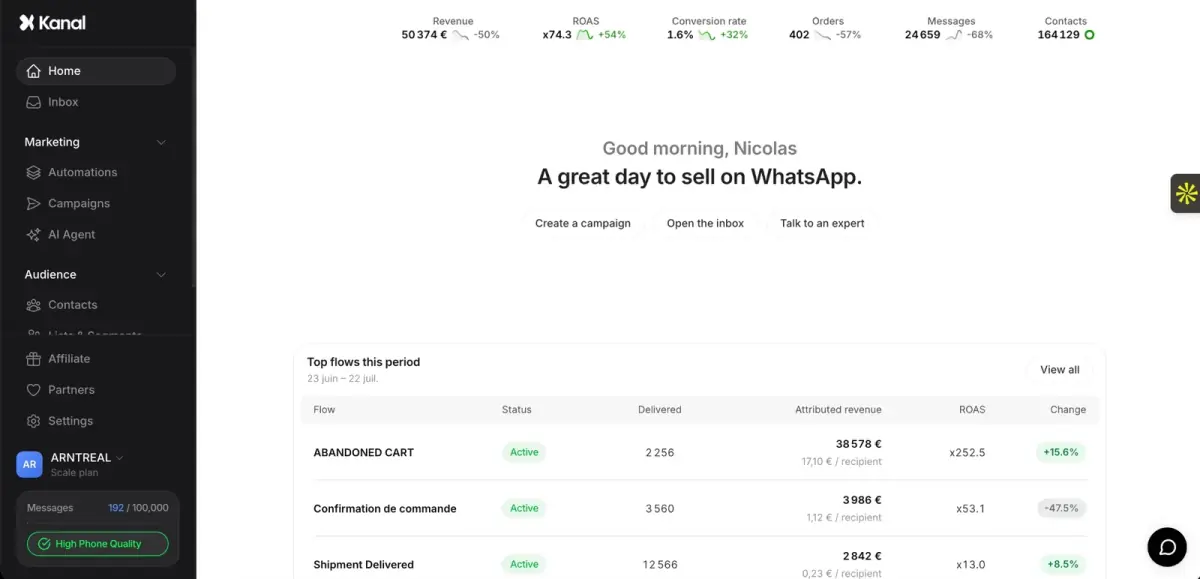
See Kanal on your own store
- Your campaigns and cart reminders on WhatsApp, starting from your own store
- Post-purchase offers, back-in-stock alerts, then the AI agent that advises your customers
- You leave with the plan that fits and its price
From €89/month
- brands
- 500+
- to set up
- 5 min
- open rate on WhatsApp
- +90%
Nicolas helps e-commerce brands grow revenue with WhatsApp marketing. With deep expertise in Shopify ecosystems and conversational commerce, he shares proven strategies for abandoned cart recovery, broadcast campaigns, and AI-powered customer engagement.